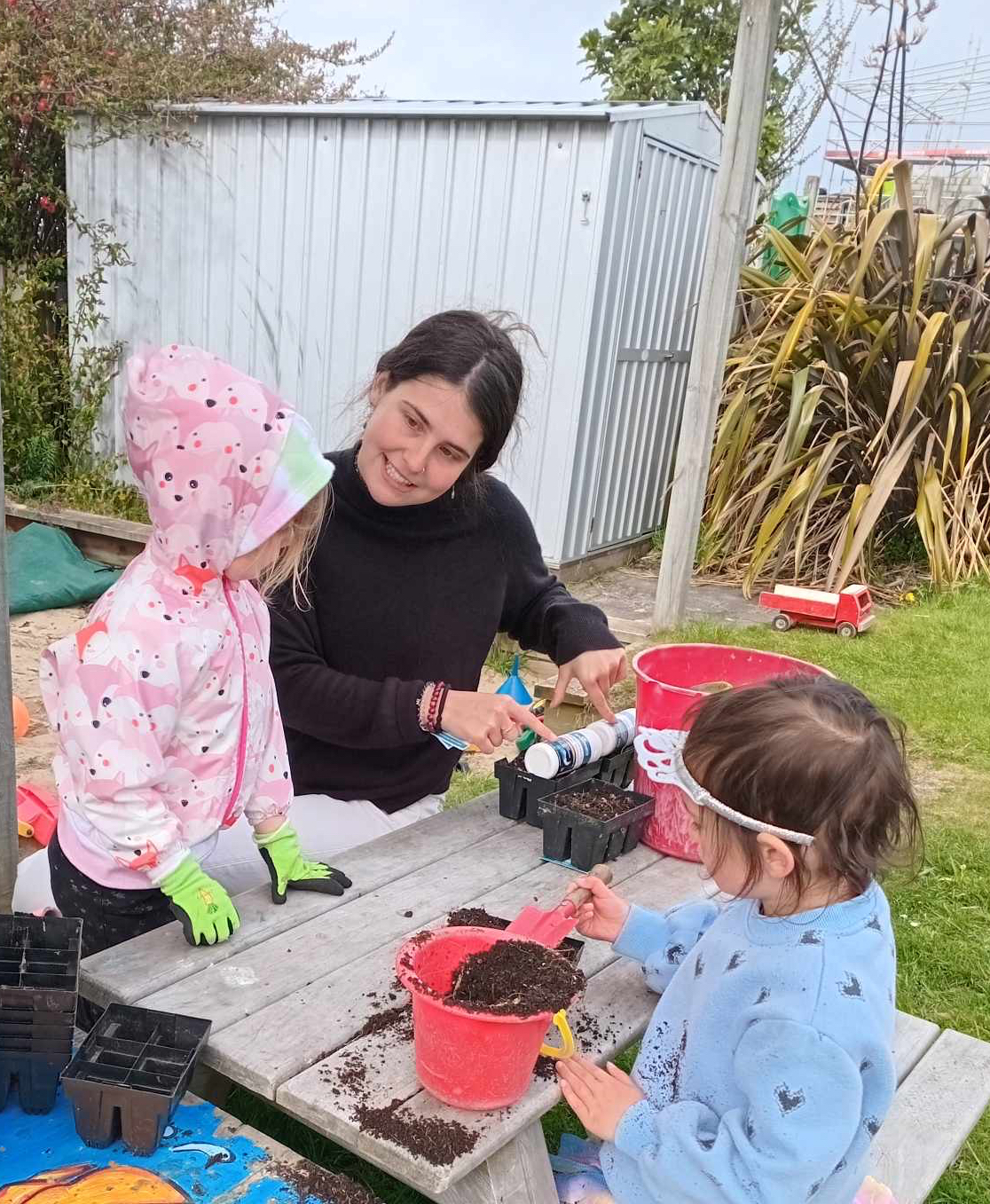
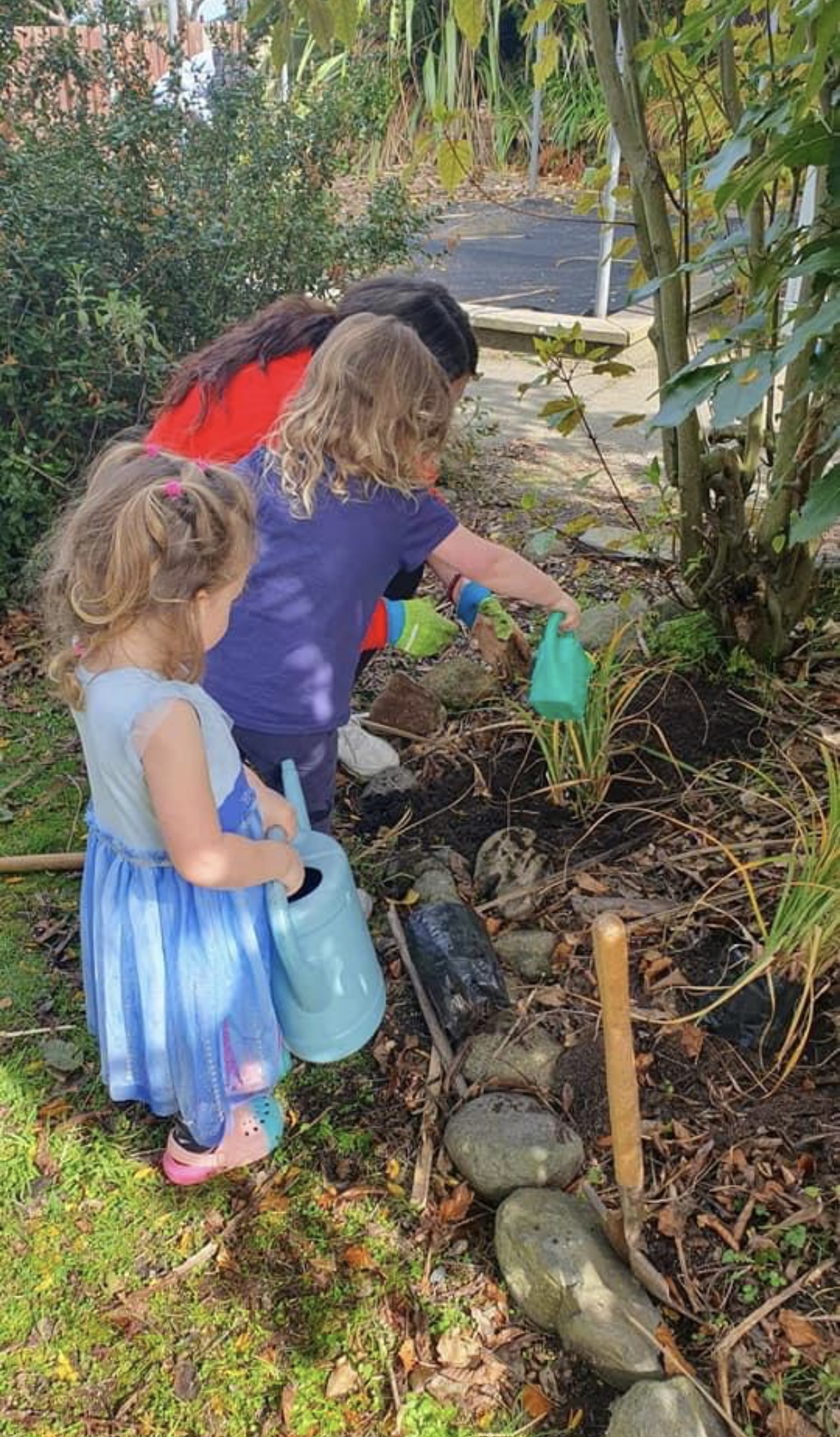
“We don’t have a garden at home,” exclaimed one of the parents as her two-year-old excitedly “tucked the plant into bed” while we planted native plants around the school grounds. She repeated to herself in a sing-song manner, “I am gardening, I am gardening…” Many other children had already slipped on their gardening gloves, toy cars and building blocks left astray in exchange for shovels and watering pails. At the end of the afternoon, the toddler’s mother said it was time to go, but not before the young girl clasped onto my leg with a big hug. This was one shared experience from three weeks spent at a playcentre near the gardens in Dunedin, New Zealand. I was able to pursue my love for children and nature through volunteering with Mornington Playcentre, working two days a week to incorporate environmental activities into the days of children aged twelve months to five years.
During my time at university, I found ways to engage with the development of young minds through programs such as AR Kids Read, where I served as a tutor for 1st-4th graders, helping them achieve higher reading comprehension and promoting literacy for students in Arkansas. A child’s desire to learn, be curious, and ask questions always serves as a segue into interesting conversations and ensures that I stay on my toes. I wanted to find a similar way to observe childlike interactions, this time between nature and child development.
“It may also seem odd to find school-aged children motivated to take up gardening. However, gardening can provide students with the tools they need to manage their emotions and improve their learning potential.” (National Center on Safe Supportive Learning Environments)
The playcentre has a list of goals to be reached through developmental stages, one of which is “mana atua”, or well-being. This goal states, “Children experience an environment where their emotional well-being is nurtured.” Another, “mana aotūroa”, states, “Children experience an environment where they develop working theories for making sense of the natural, social, physical, and material worlds.” Environmental activities such as seed sowing and nature crafts inspire an environment that is both creative and stimulating, initiating curiosity and a desire to learn. I witnessed this in action as the children made sense of how plants need water and food just as humans do, their excitement evident in wide smiles when one child found a worm in the soil—an unexpected treasure, akin to a present neatly wrapped under the tree.
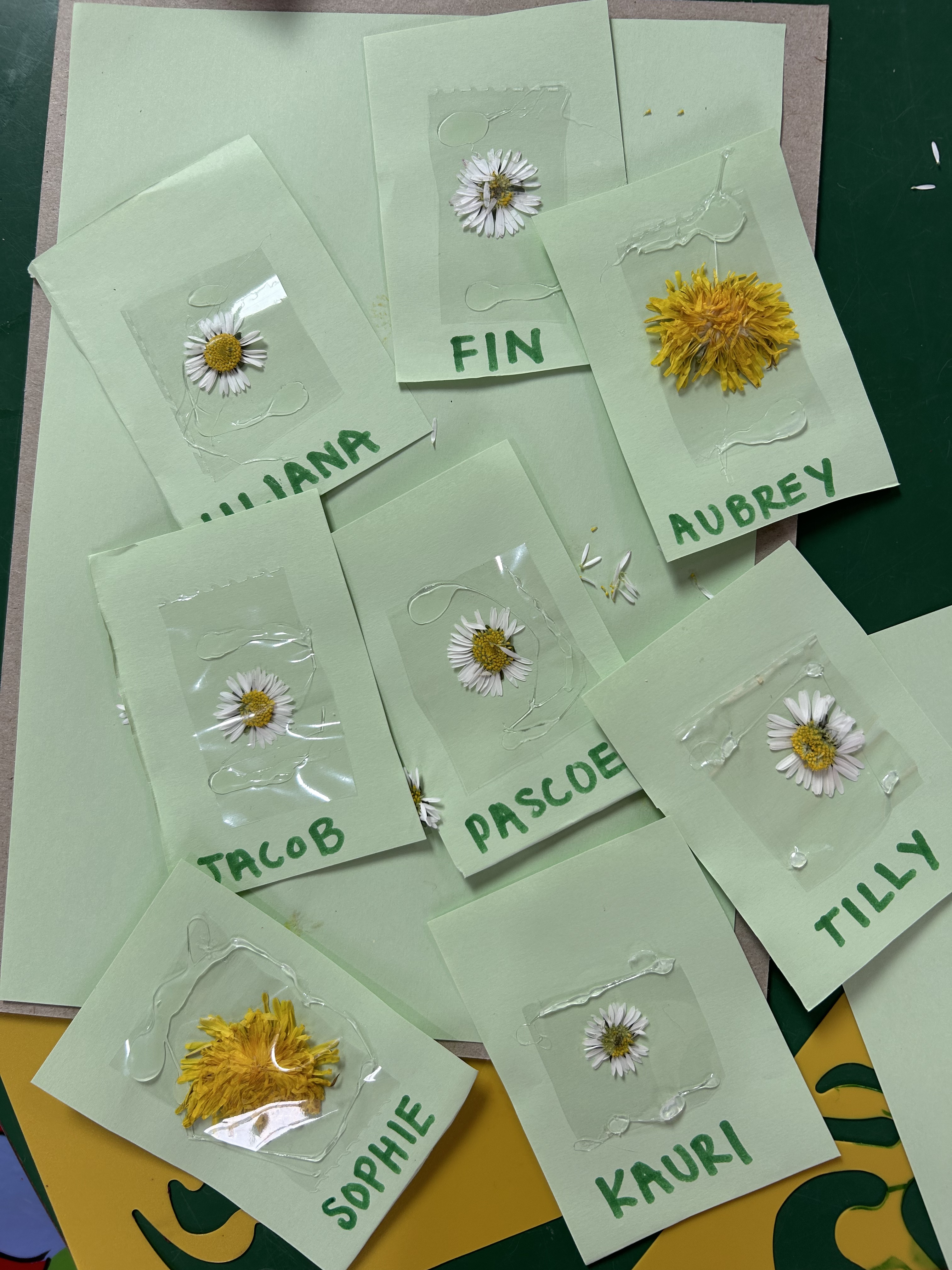
During my second day volunteering on the school grounds, I found daffodils and dandelions covering the playground area. Incorporating nature crafts into daily activities is one way to ensure interest as well as provide the children with something tangible as a reminder that we are all a part of nature. I was struck by the sharing nature of the children as they gathered flowers and clovers that would soon be pressed into thin crafts. Mere minutes before, they had been protesting whose turn it was on the swing. In contrast, while collecting flowers to create a beautiful work of art, one child gathered many to distribute to his friends, ensuring they too could experience the joy of flower pressing.
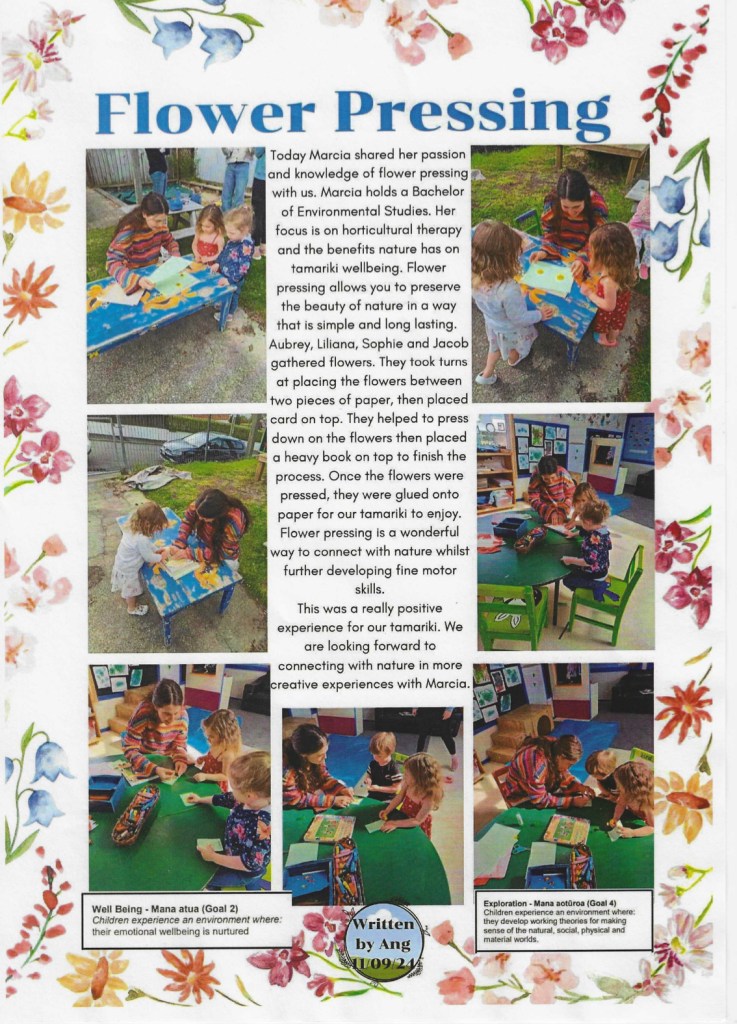
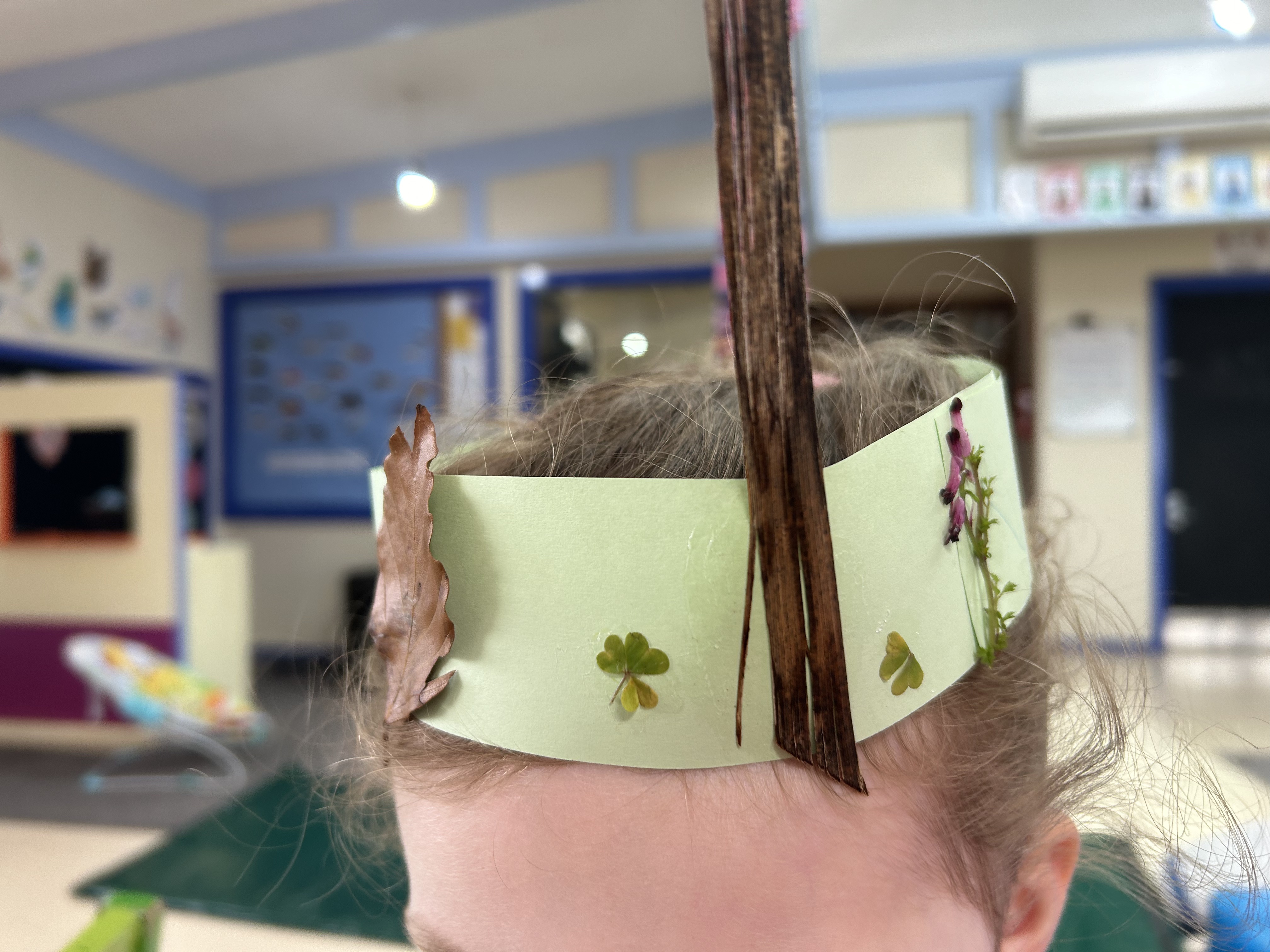
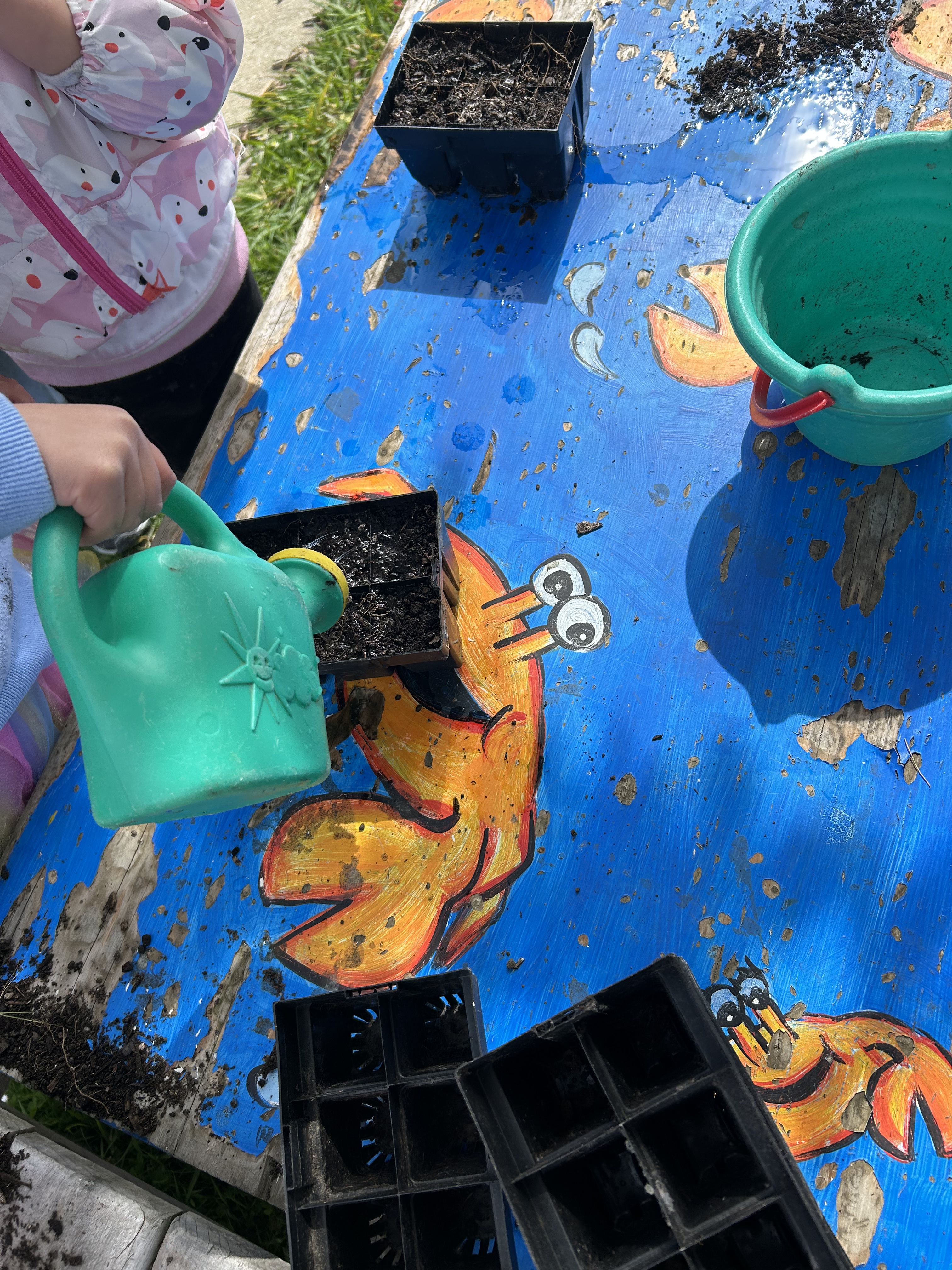
On another day at the playcentre, we planted pansies, peas, and beans, counting each one as we placed them into six-celled trays to be enjoyed by mid-spring. Material things quickly faded in the allure of putting hands in the dirt, as many children once again traded their toys for a handful of sugar snap peas. One of my favorite activities was making “nature crowns” to wear throughout the day at the playcentre. While some children opted to use markers, others glued common weeds to their headbands, with one exclaiming that the sharp blade of grass stuck to mine resembled that of a unicorn. Nature inspires us all to be creative and think outside the box, providing an endless playground full of excitement and inquiry.
With all good things, my time at the playcentre came to an end. I met so many incredible parents, caretakers, and children who welcomed me into their community. They even celebrated my departure with a thank-you note and freshly made snickerdoodles crafted by the students—one of my favorite treats that remind me of home. I am very grateful to Mornington for allowing me to volunteer and witness the rewarding impact of horticulture on children.

 Green Minds Think Alike
Leave a reply to wmwilliams1951 Cancel reply