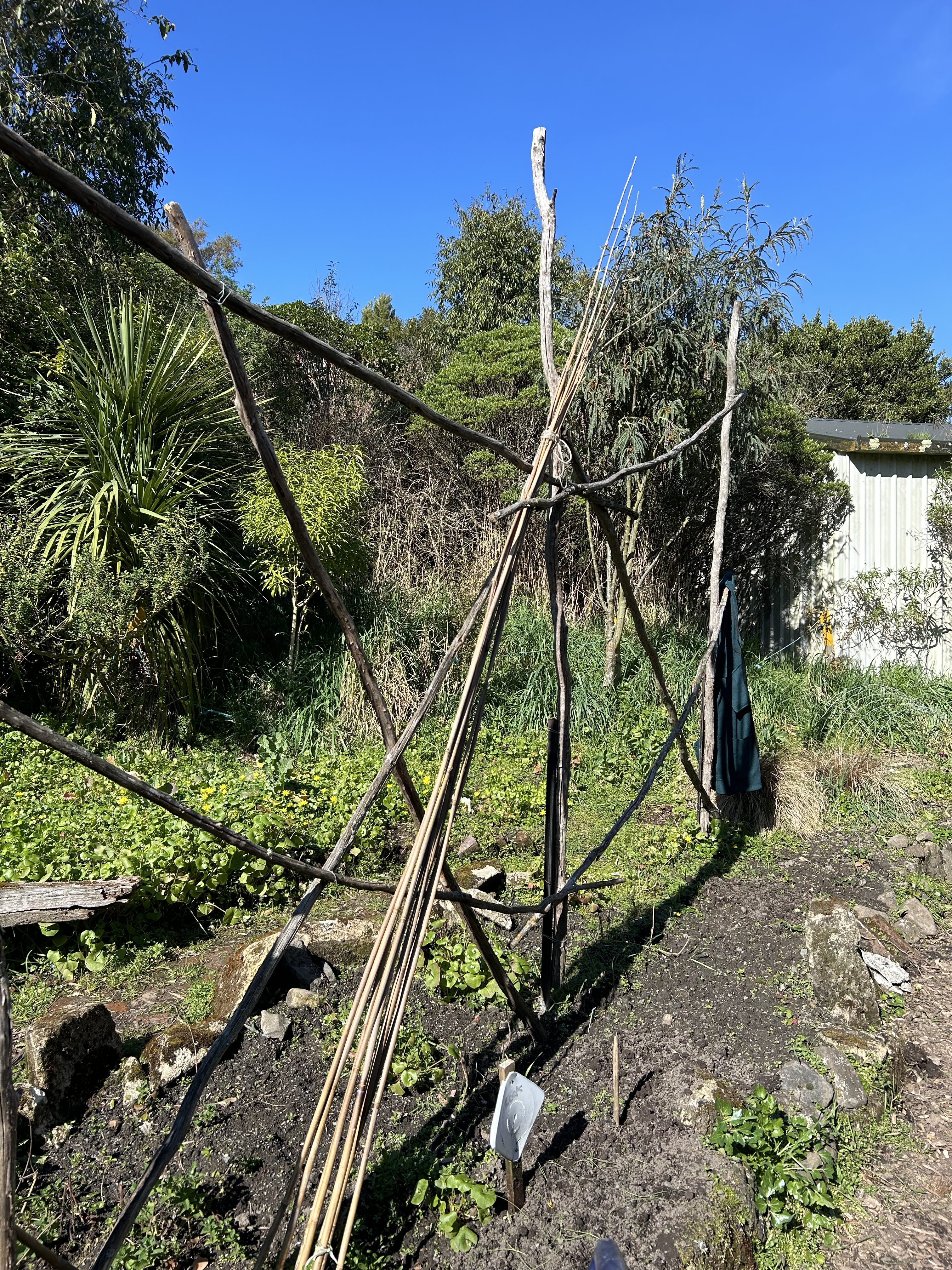
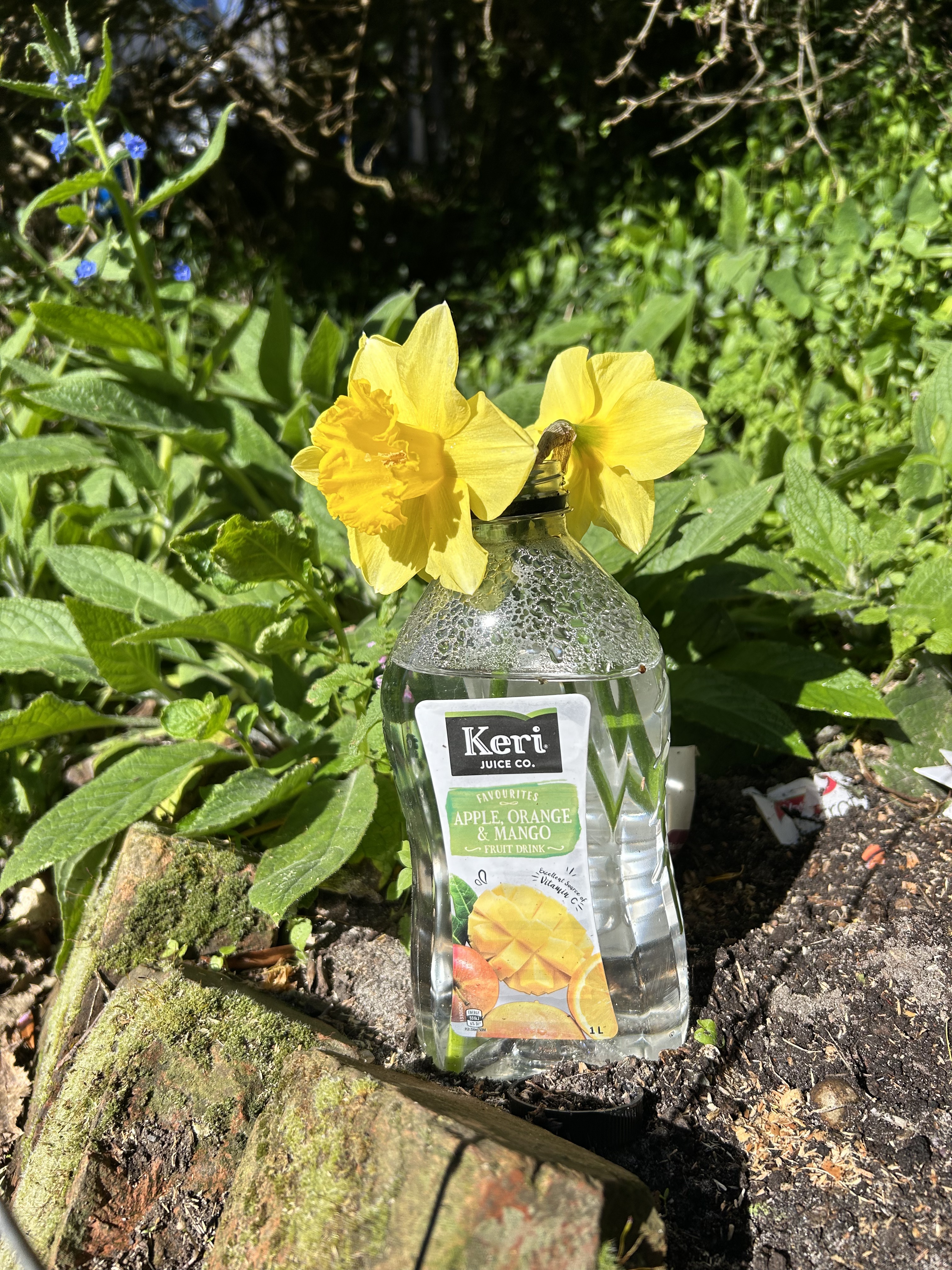
Nearly 900 miles from where I began my journey in New Zealand, I had the privilege of volunteering at the Shetland Community Gardens and Conservation Nursery, nestled between the Arai Te Uru Marae and the suburb of Kaikorai Valley in Dunedin. As I entered the gardens, I was immediately greeted by a canopy of native plants overhead. The South Island differs significantly from the North Island in terms of climate and agriculture, but I recognized many of the plants covering the grounds, from kale to calendula. I took note of the sustainable and creative uses of the space, including trellises made from tree limbs and plant covers recycled from juice containers.
I was welcomed by Hendrikus, the garden facilitator and a wellspring of knowledge about all things native. Hendrikus has been at the forefront of conservation around Dunedin for nearly forty years and has been at the Shetland Community Gardens since its establishment in 1996. I was joined by other volunteers and another facilitator, Craig, who eagerly gave me a tour of the grounds, including a visit to the orchard, home to twelve apple trees, four plum trees, and a couple of pear trees. I was amazed by the thoughtful use of space and the vision for each untouched spot, including the potential for the Three Sisters planting technique, derived from Native American agricultural practices. The Three Sisters consist of three crops used as companion plants: corn, beans, and pumpkin. Additionally, I was introduced to each plant and space in both Māori and English. The space is shared with the local Marae, where many Māori events and greetings take place.
My first task at the Shetland Gardens was to weed a bed full of what is known as miner’s lettuce, commonly eaten by miners in North America during the California Gold Rush for its nutrient density. However, the lettuce proved to be a nuisance, overtaking each bed and choking out other crops. Needless to say, my host family received a bag full of miner’s lettuce, which we prepared in our dinner salad that evening. Next to the beds of the miner’s lettuce, I learned that someone had engaged in an act of “guerilla gardening” (gardening without legal permission) in the formerly established bed of yams. Instead of removing the guerilla gardener’s space, it now exists as a unique area of its own. According to the garden facilitators, it’s not uncommon for people to come in to harvest crops or create their own spaces, but Shetland prefers that individuals ask first; nevertheless, the need for access to food seems pressing as demonstrated by those acts.
As I pulled the lettuce out by its roots, a volunteer named Grant, who was weeding a nearby bed, provided me with a bit of encouragement. My first question for people gardening alongside me is usually how long they have been gardening or why they volunteer at the gardens. Grant shared that he had recently undergone spinal surgery and volunteered to engage in natural movement and physical activity. The idea of horticultural therapy extends beyond mental well-being to encompass physiotherapy; natural movements in the garden can often provide relief to those seeking rehabilitation and accessibility. I posed the same question to Hendrikus while we were potting capsicum (bell peppers), and he shared that his earliest memory was of being two years old in the rose garden, lifting his mother’s pruning tools. Another volunteer, Louis, expressed her dislike for small talk but said that she never had to worry about insignificant conversations in the gardens due to the strong sense of community and desire to connect.
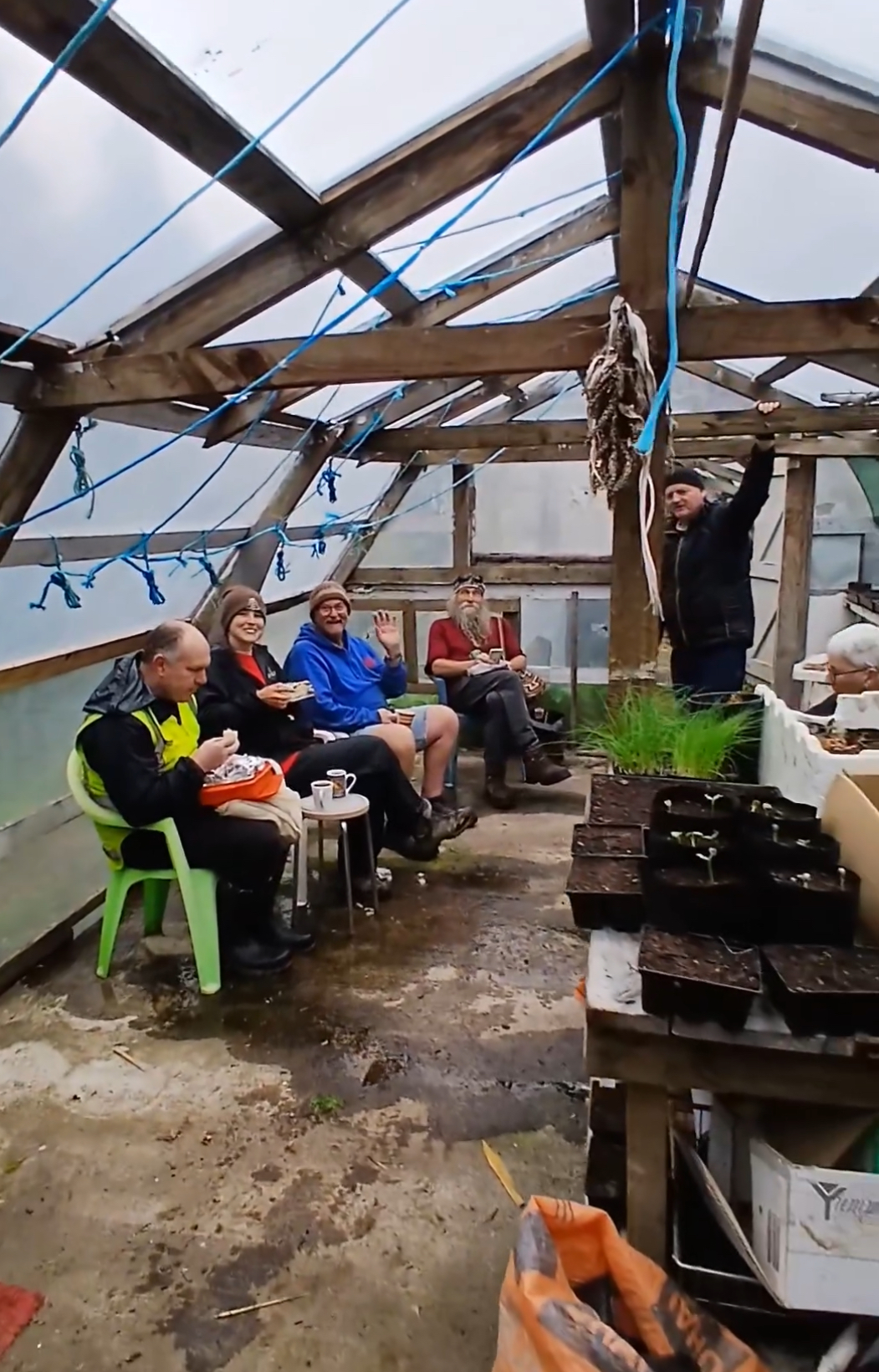
During my second week at the Shetland Gardens, we would have considered ourselves lucky to have a day without rain. Instead of postponing our volunteer day, we situated ourselves in the glasshouse to pot seedlings while sharing tea. During our tea breaks, we engaged in conversations about gardening, politics, family, poetry, music, travel, and everything in between. The tight-knit nature of the volunteers and facilitators felt like family as we joked with one another and shared our stories. The communal aspect of community gardens is so significant and impactful that volunteers return for years at a time, drawn by the sense of belonging. Community gardens like Shetland provide a safe space where people feel needed and valued, which is evident when others express concern if someone doesn’t show up on their usual volunteer days.
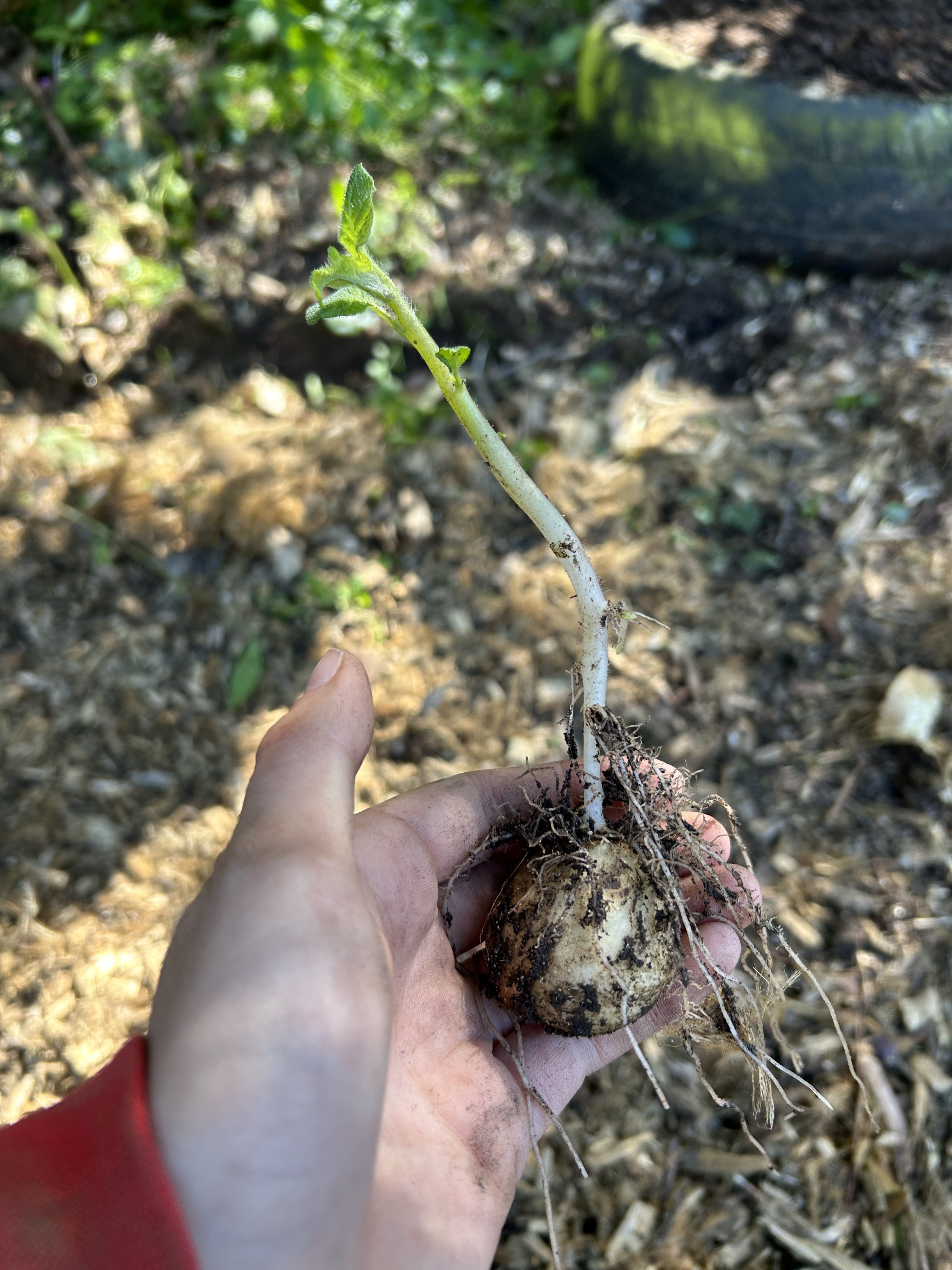
Another aspect of community showcased at Shetland was their sharing nature. Not only did Shetland share their space and knowledge, but they also shared their resources. When I told Hendrik that I was volunteering at a nearby playcentre for young children, he immediately provided me with four different native species to plant along the school grounds, one of which was Carex, known for growing into a lush green hedge. Additionally, we shared nibbles of chocolate over tea and enjoyed the harvests of “accidental” spuds. I grew to admire the emphasis on native planting at Shetland, especially as I learned more about New Zealand’s domestic plants, a passion evident in the extensive knowledge of native species held by Hendrik.
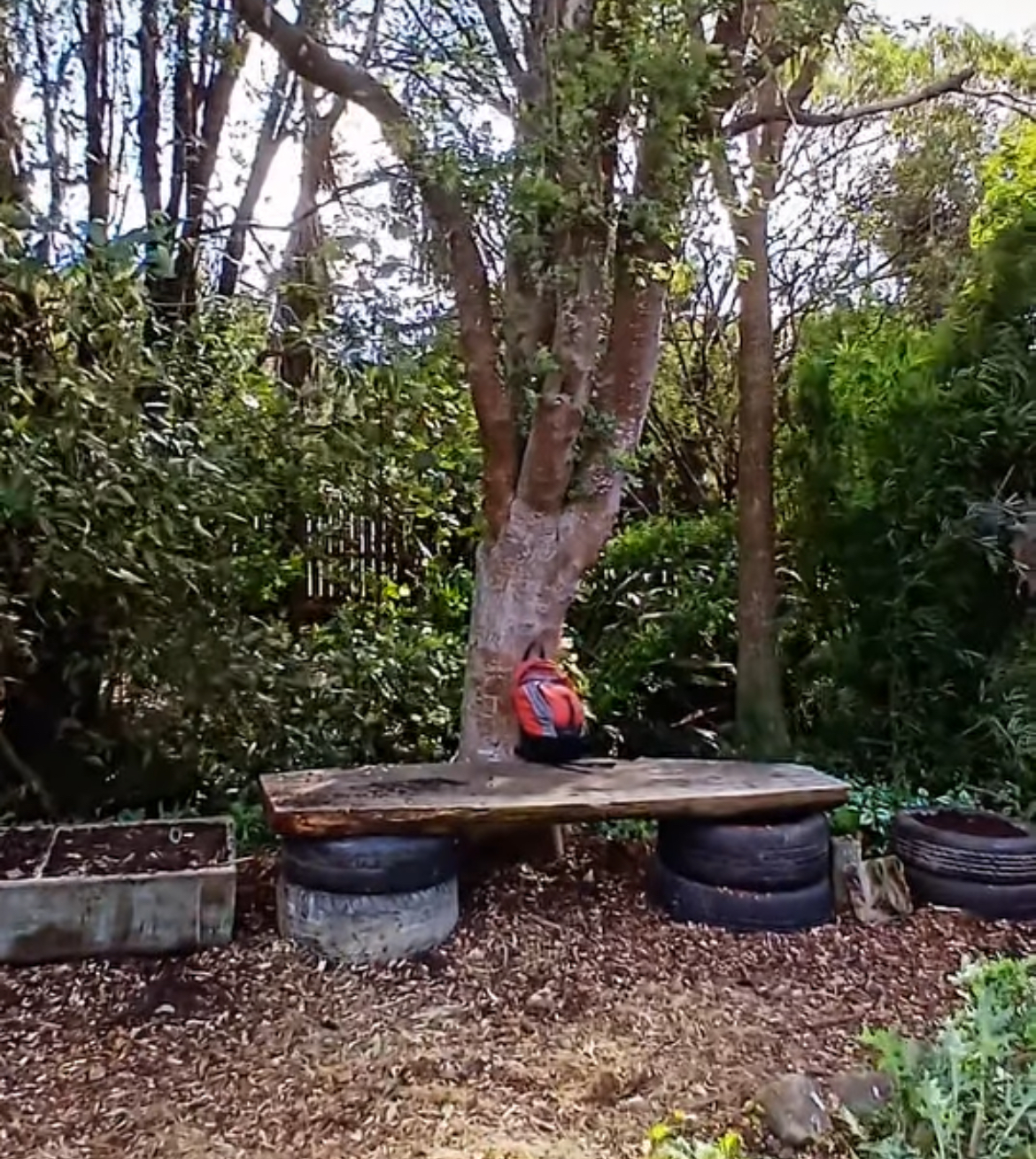
My last day at Shetland Community Gardens was bittersweet yet highly productive in terms of “mahi”, or work. Craig and I weeded a bed of stinging and dead nettle to expose the rich brown soil, which contrasted beautifully with the blackcurrant shrubs we left rooted in the ground. We carefully placed recycled tires on the newly exposed ground, stacking a piece of board on top to create a makeshift bench. We then created new planters from an old trough and more recycled tires, mulching the area to complete a fulfilling project full of laughter and bugs. I sat on the bench next to the blackcurrants, admiring the space one last time, hoping to return someday to see spring in full bloom. I am immensely grateful to the “Shetland Family” for welcoming me with open arms and for being a source of knowledge and community during my fellowship.
Keep up with Shetland Community Gardens’ amazing work here:


 Green Minds Think Alike
Leave a reply to reallygarden96b891076d Cancel reply