My Time at Midori Farm
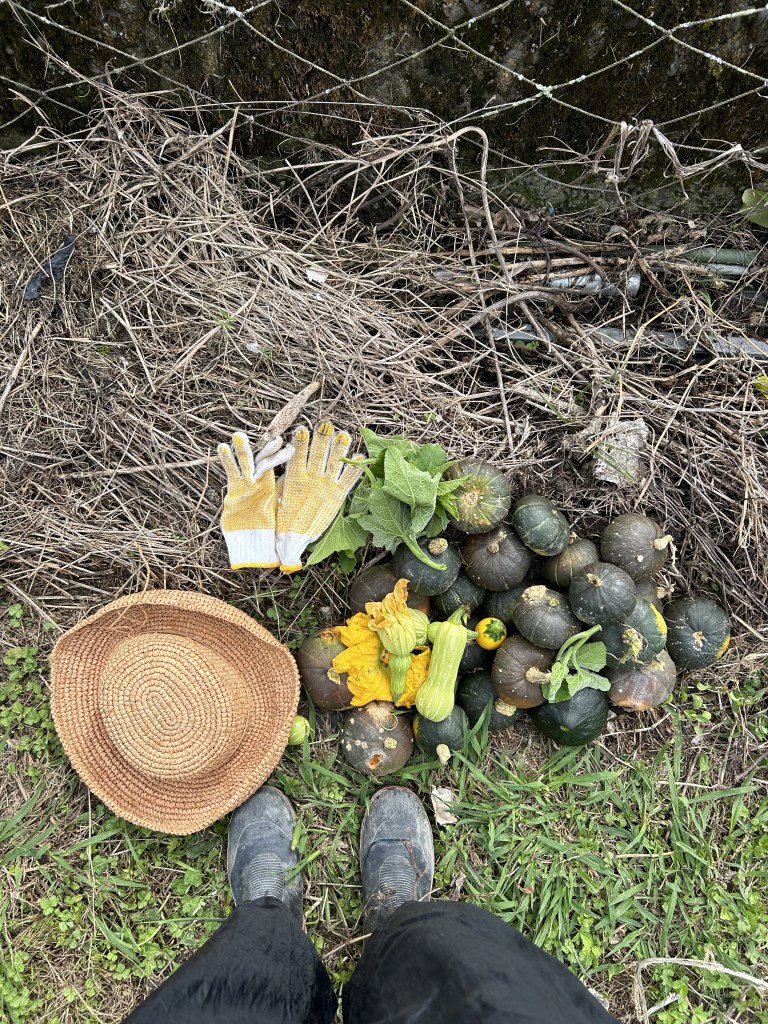
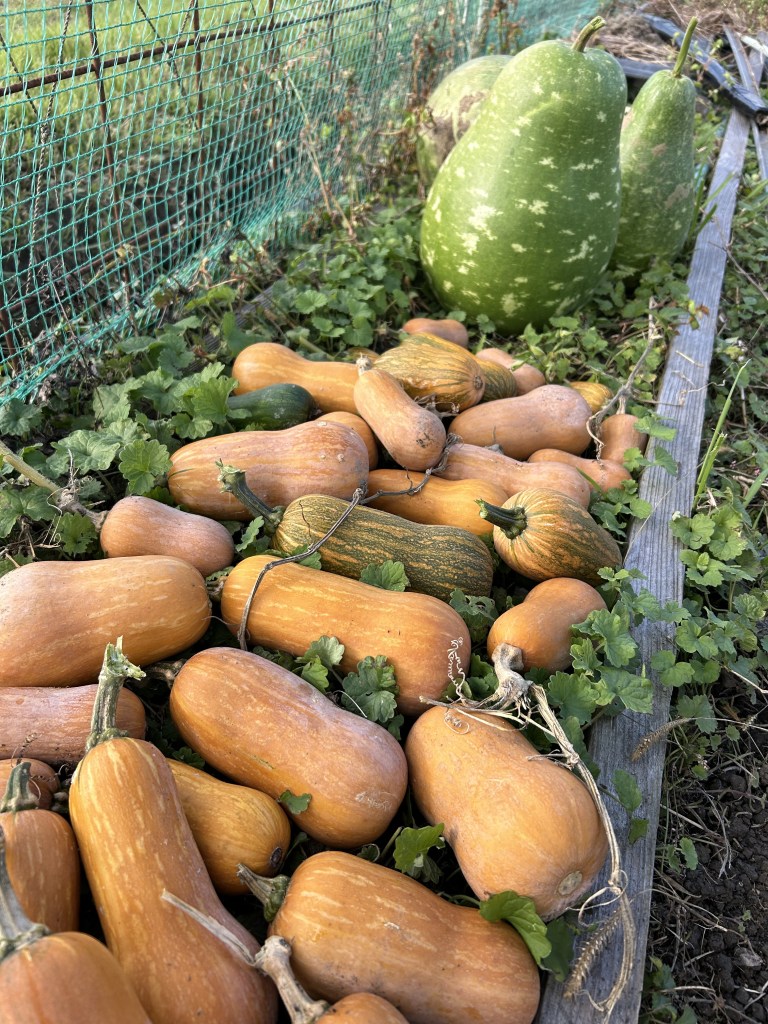
Situated in the rolling mountains of Kyoto is Midori Farm, which translates to “Green” Farm. After spending multiple weeks in the cities of Tokyo and Kyoto, I was in desperate need of a natural prescription of the still and rural countryside. Although as a child I found myself drawn to the chaos of the city, I now know that my mind and heart can be found where it is quiet and green. When first arriving to Midori Farm, I saw all of my favorite fall vegetables growing in abundance. Butternut squash and sweet pea vines wrapped around the trellis reaching for the sun that appeared once every couple of days. My host for the duration of my time at Midori made me aware that there would be another volunteer at the home I would spend the new few weeks. Upon arriving at the beautiful, traditional Japanese-style house, I was met with kind eyes and a warm smile from Lee, a volunteer from Taiwan. Little did I know in that moment that the woman whose kind gaze I met would become a lifelong friend who I admire deeply.
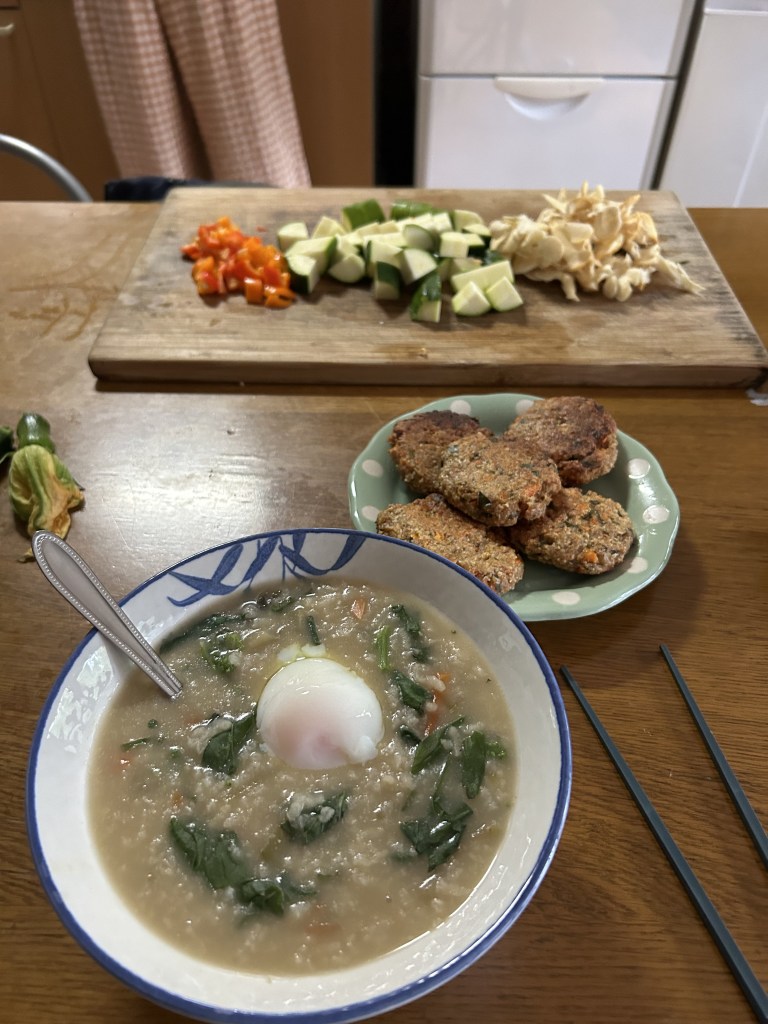
The first of many dinners that Lee and I would spend together, I grabbed for my konbini-style meal while Lee reached for her foraged vegetables and herbs. She insisted that we were to share her carefully curated meal, and soon after we began to share more, from stories of our families to the woes of the world. I quickly learned that I had much to gain from Lee, from her vast knowledge of history to her diligent patience and understanding. Lee also shared with me that she was a vegetarian. I admired her dedication to her health and the environment through her diet and lifestyle, even making her own natural haircare and skincare products, which she would later demonstrate to me in our shared kitchen space. Each night following the first night, Lee and I shared every meal with one another conversating about everything under the sun. The days we worked on the farm, which sprawled among three different locations, were spent talking about the lifestyle of organic smallholding in Japan. Chuck, our host, described it to be a difficult yet rewarding way of life. Although he struggled to make ends meet financially from farming, Chuck described it as his “song and muse.” When I discussed my project with Chuck, he told me his affinity for farming and how it was that of a therapy to him. These informal conversations of nature-based interactions being therapeutic to those in which I have interacted with have become a pattern that is obvious to anyone in this field. Nature is therapeutic, and I found this to be true as the three of us hand-planted hundreds of garlic in a harmonious silence.
Lee and I loaded our bicycles each day with the tools needed for the day before making our way down the narrow and windy roads through the colorful cedar forest. Each day, we were given a list of seeds to sow in preparation for winter, as well as pruning and plucking for the nearby farmers’ market that Chuck supplied to each week. There were many things in season from a variety of brassicas to Japanese eggplants, all of which were under attack from the much-despised white moth. This dainty pest looks innocent, but causes immense harm to newly sprouted seedlings. Additionally, I was taught to identify the near-microscopic, white caterpillar eggs that found themselves nestled behind the cabbage leaves. Organic farming, while eco-conscious, is difficult to maintain as each day there are new battles to be fought and new obstacles to overcome. Chuck talked of these obstacles as we wrapped the produce that was to be taken to the market. He held up an eggplant that was oddly-shapen with markings from pests: “This is how you know it is organic.” Although what can be similarly be found at the nearby konbini or supermarket may look nothing short of perfect, it is the very vegetables I held in my hand that demonstrated resilience and diligence. A book by an author whose writing class I took in Ireland comes to mind. “Islands of Abandonment: Life in the Posthuman Landscape” by Cal Flyn speaks of nature’s resistance to hardship, and the places that this can be demonstrated from places recovering from nuclear war or natural disasters.
“An organic process, ruination: these artificial structures are just as vulnerable to decay as we are – they need constant attention, maintenance, occupation. Our presence is their beating heart.”
Just as Cal put it so elegantly, the organic process is one that requires attentiveness and dedication, both of which have been demonstrated by the many hosts and volunteers I have came into contact with along my journey, including at Midori Farm. Gaining knowledge into farming practices within Japanese agriculture was entirely rewarding as I learned about Japanese irrigation and natural terminologies in the Japanese language. Lee taught me a lot about the local fauna by bringing home different “weeds” each day that could serve as an addition to our dinner salad or miso soup. Lee is one of the most incredible cooks, and our evenings in the kitchen are some of my fondest memories of my time abroad thus far. I quickly adapted to Lee’s vegetarian diet and we prepared an array of soups, breads, and stir fries that kept us nourished throughout our work days. On our days off, Lee and I would travel into the city with our packed lunch. A time I remember well was spent in a local temple, sitting under the canopy to avoid the light drizzle that must have followed us from the countryside. Lee has been traveling for years across the world and always had the most incredible stories to tell. Lee also volunteers as a teacher, and she is exactly that. The love and passion she has for knowledge and for others is evident in the way she treats others, and I am so honored to have witnessed this firsthand.
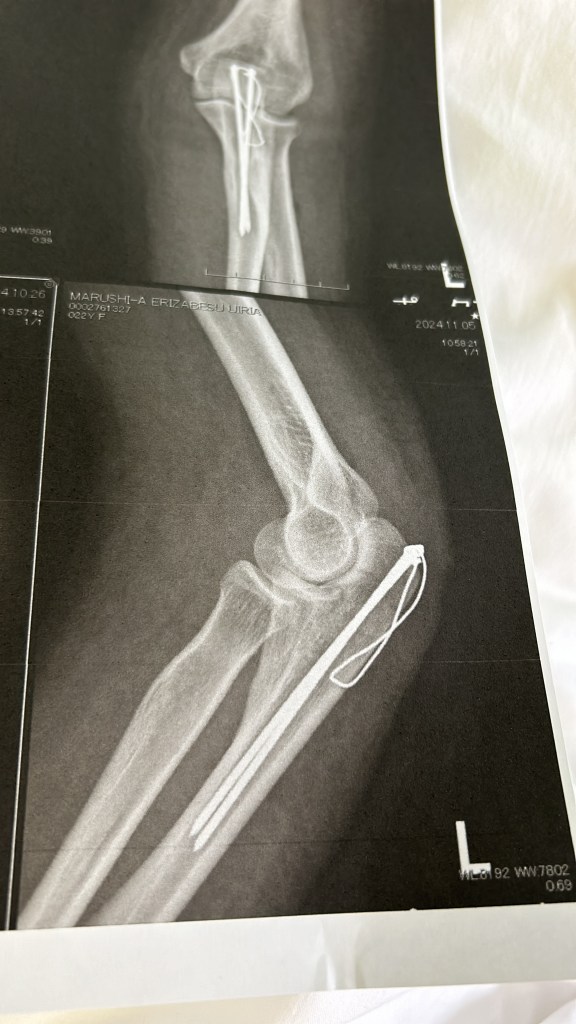
I fell behind on my entries for a number of reasons, one of which is the fact that I sustained an injury during my stay in Japan. While traveling the farm one morning, a tool fell in between the spokes of my bicycle and sent me over the handlebars, breaking and dislocating my elbow and giving me a concussion. It was mere seconds before Lee arrived behind me, guiding me back the house and treating my wounds with olive oil and basil. Immediately, my open wounds eased and I felt relief as Lee tenderly wrapped my hands and arms in cloth. It would have never dawned on me to use the herbs that could be found in our kitchen to alleviate the pain that I felt, but it was Lee’s first instinct with her knowledge of antiseptic and antibacterial plants that served medicinal purposes. Within a few hours, I was sitting in the emergency room of the Kyoto Prefecture Hospital as I listened to doctor’s discuss my injuries in a language I failed to understand. It was not until I arrived home the same night that I read “necessary surgery following break” that I found myself at a loss for words. In that moment, I did not feel strong enough to do this on my own. How was I to endure a surgery in a foreign country with a language barrier and an injury I did not fully understand? Shortly after my hospital visit, I contacted my fellowship foundation and alerted them to what happened. I was given the greenlight to travel back to Arkansas, something I had originally agreed to not doing unless a dire circumstance occurred. There I found myself in a dire circumstance, yet I could not bring myself to look at flights home.
I visited a number of hospitals before I was scheduled to have surgery, which was delayed due to severe swelling. Prior to this, I had never broken a bone. The healthcare and treatment I received in Japan was exceptional. The week leading up to my surgery, Lee treated me with balms and teas that soothed my pain. The frustration I felt with a lack of movement, something I still struggle with today, was also relieved as Lee helped me each step of the way. One night in particular, I asked Lee to braid my hair. She agreed without hesitation as I handed her the hairband that was wrapped around my wrist. As she sectioned my hair into three pieces, she told me of a dream she had where a childhood friend of hers braided her hair. “I am not sure what it means,” she said. Lee had not seen this friend in years, and yet she spoke of this dream that she remembered with fondness. Although she said her friend had never braided her hair before, I suggested that maybe she dreamt of this because of the amount of gentleness and delicacy she described her friend to have, and the trust that came along with this. In that moment, I reflected on how I, too, felt similarly about the woman who I found braiding my hair. Just as Robin Wall Kimmerer states in “Braiding Sweetgrass: Indigenous Wisdom, Scientific Knowledge, and the Teachings of Plants”:
“There is such tenderness in braiding the hair of someone you love. Kindness and something more flow between the braider and the braided, the two connected by the cord of the plait.”
I will always remember the kind woman who braided my hair and dressed my wounds. Thank you, Lee, for taking care of me in my most vulnerable state, and for offering me a motherly love and tenderness that I will forever appreciate.
My Time at Kyoto Chubu Hospital
I was greeted by two young nurses who helped gather my information and translate what would be happening within the 24 hours prior to surgery. One of the nurses, Yuzuha, translated to me that she would be my nurse for that evening and would help guide me through the process. I cannot remember a time where I felt more scared and alone, but the kindness she extended to me helped to put my mind at ease. As I sat alone in my shared hospital room, I felt lucky to have the section of the room that allowed me to have window access. Outside of my window I found the same beautiful cedar forest and mountains that I did at Midori Farm. There are countless studies that I have read about through my certification at Thrive, a UK-based horticultural therapy organization, and literature that have shared that patients with hospital rooms with access to a window prove to have shorter stays compared to patients without window access. According to R. S. Ulrich, patients recovering from a cholecystectomy “had shorter postoperative hospital stays, received fewer negative evaluative comments in nurses’ notes, and took fewer potent analgesics than 23 matched patients in similar rooms with windows facing a brick building wall.” In an unprecedented way, nature found itself to be a healing force in my life even as I sat within the four gray walls of a hospital.
My surgeon, Dr. Yoshihiro Kotoura, who I met before my admission, also provided a sense of safety and understanding as he told me a story of a woman he met while he was studying at the Mayo Clinic in New York. He spoke to me about a late night at the subway station when he was without local currency, which led the staff telling him he could not travel without USD. An American woman approached him and handed him his bus fare, and wished him well on his journey. “Because of this woman’s kindness to me as a foreigner, it is my honor to treat you while you are a foreigner in Japan.” I was brought to tears by this, and he assured me that I would be well on my way to the UK come December. Further, he ensured that my family was aware of my situation and that I had support throughout the process despite being alone. The nurses, including Yuzuha who spoke with me enthusiastically through Google translate, made me feel at home while being abroad. Although my surgery proved to be painful and harsh with only Tylenol to treat the pain postoperative, my arm has healed tremendously since my surgery in early November.
After my surgery, I spent a wonderful two weeks with my brother, turned 23 in Tokyo, and took the bullet train to visit a friend who is living in Japan as a Japanese English Teaching Assistant. This time not only allowed me to heal externally, but also internally. In this time, it was my loved ones who braided my hair just as Lee did, which in turn gave me the confidence to keep pursuing my travels and project. My time with my brother and my friends gave me the opportunity to find the same enthusiasm and motivation I had prior to my injury, and I am thankful for this time of recovery and those who contributed to it. Even despite the hardship I faced while in Japan, I would not exchange my time there for anything due to the incredible community of people who took care of me as I was thousands of miles away from home. Because of this injury, I feel more confident in navigating the unexpected and feel more supported than I could have ever imagined. Nearly two months later, I am happy to be on the mend and working towards a full range of motion in the UK. More to come on England’s beautiful gardens…


 Green Minds Think Alike
Leave a comment